From Data to Decisions: Exploring the Technology Behind What We See
Ever wonder how your favorite streaming service knows what you want to watch next? Discover how data and artificial intelligence shape our digital experiences and influence the future of work.
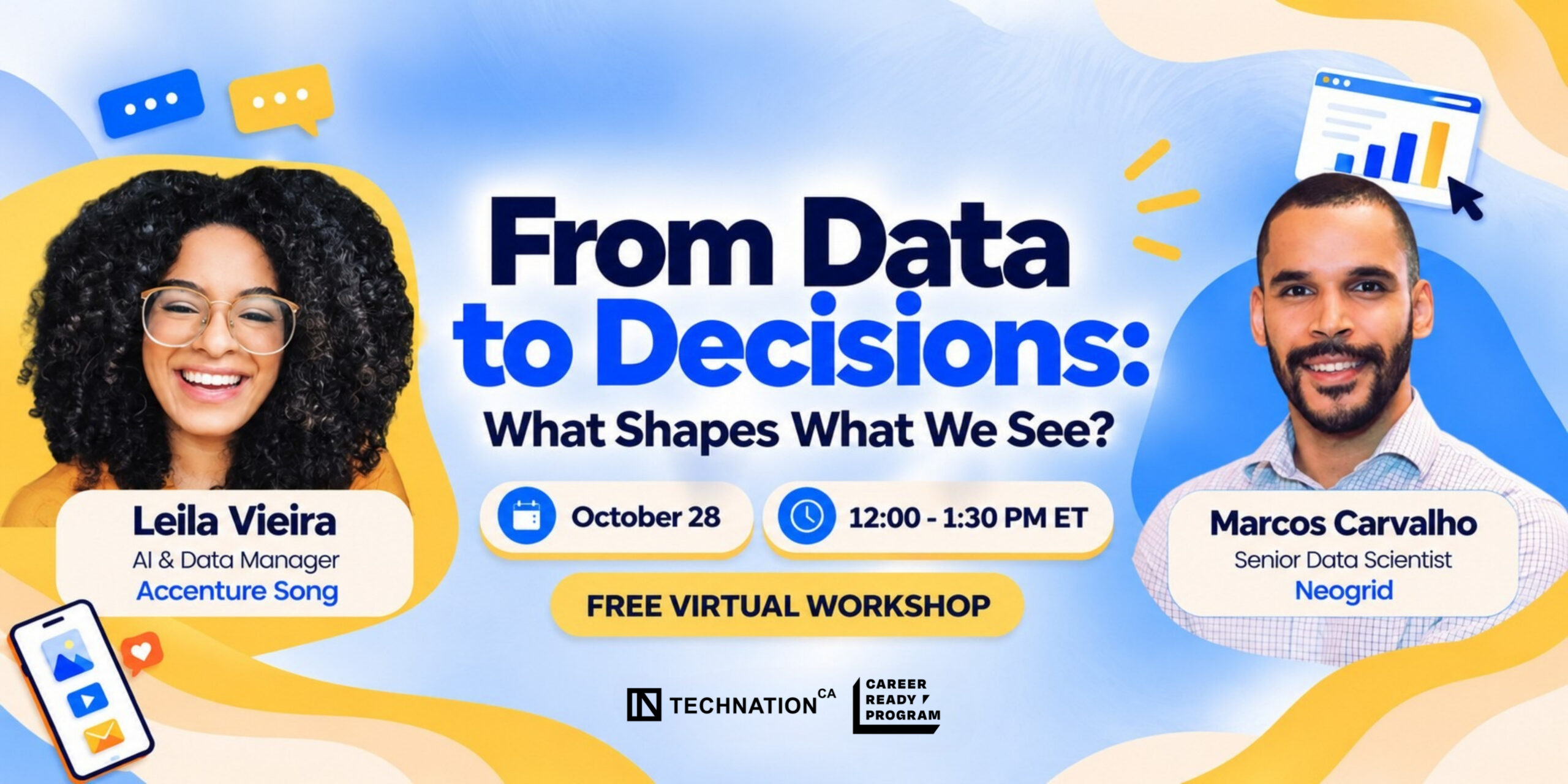
On October 28, TECHNATION’s Career Ready program hosted From Data to Decisions: What Shapes What We See, an interactive workshop exploring how data influences our everyday experiences and the decisions businesses make.
Led by Leila Vieira, AI & Data Manager at Accenture Song, and Marcos Carvalho, Senior Data Scientist at Neogrid, the session combined real-world examples, interactive discussions and career insights to help participants understand the growing role of data and AI across industries.
The Power of Personalization
From streaming recommendations to personalized advertising, data plays a significant role in shaping what we see online.
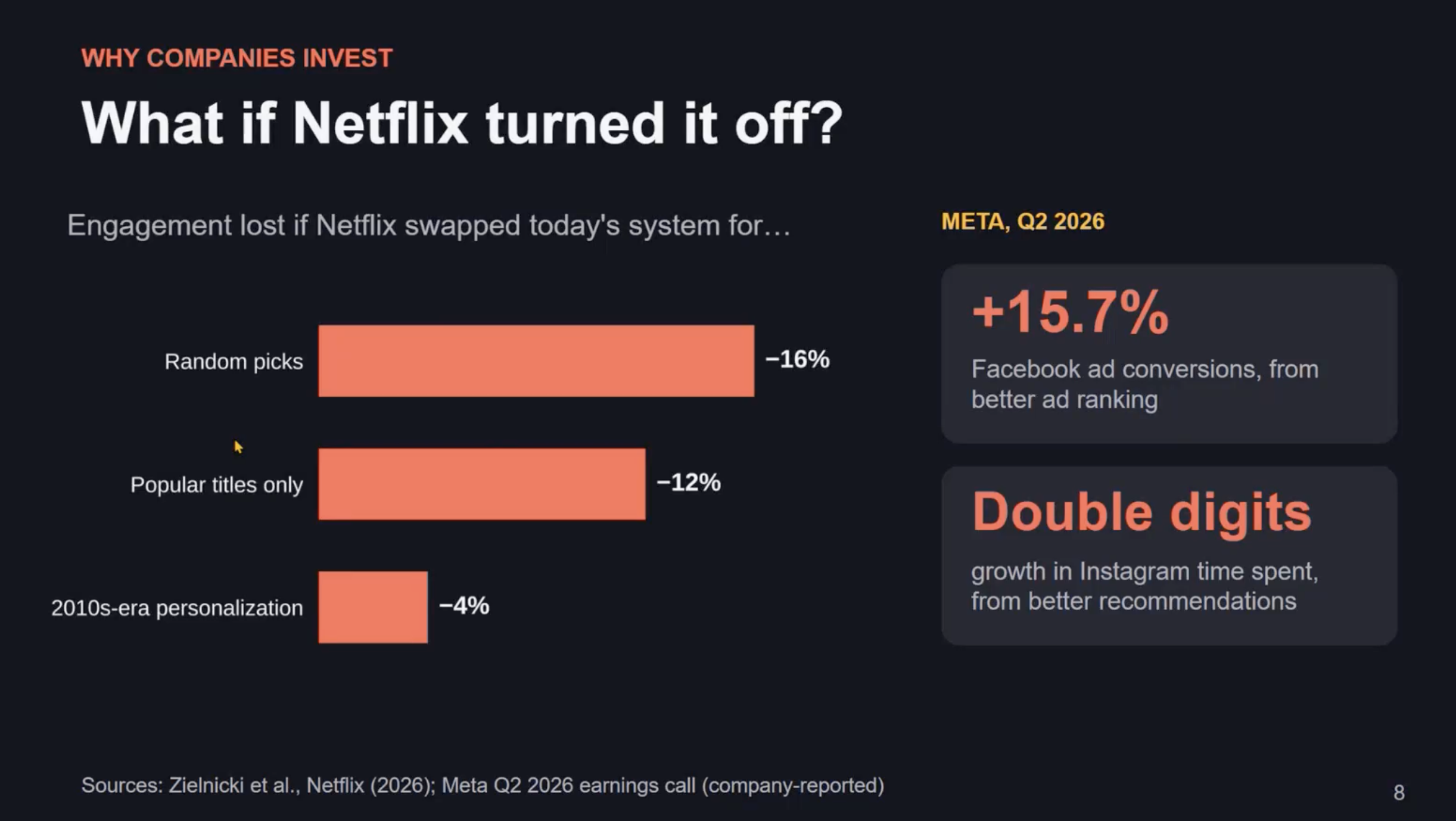
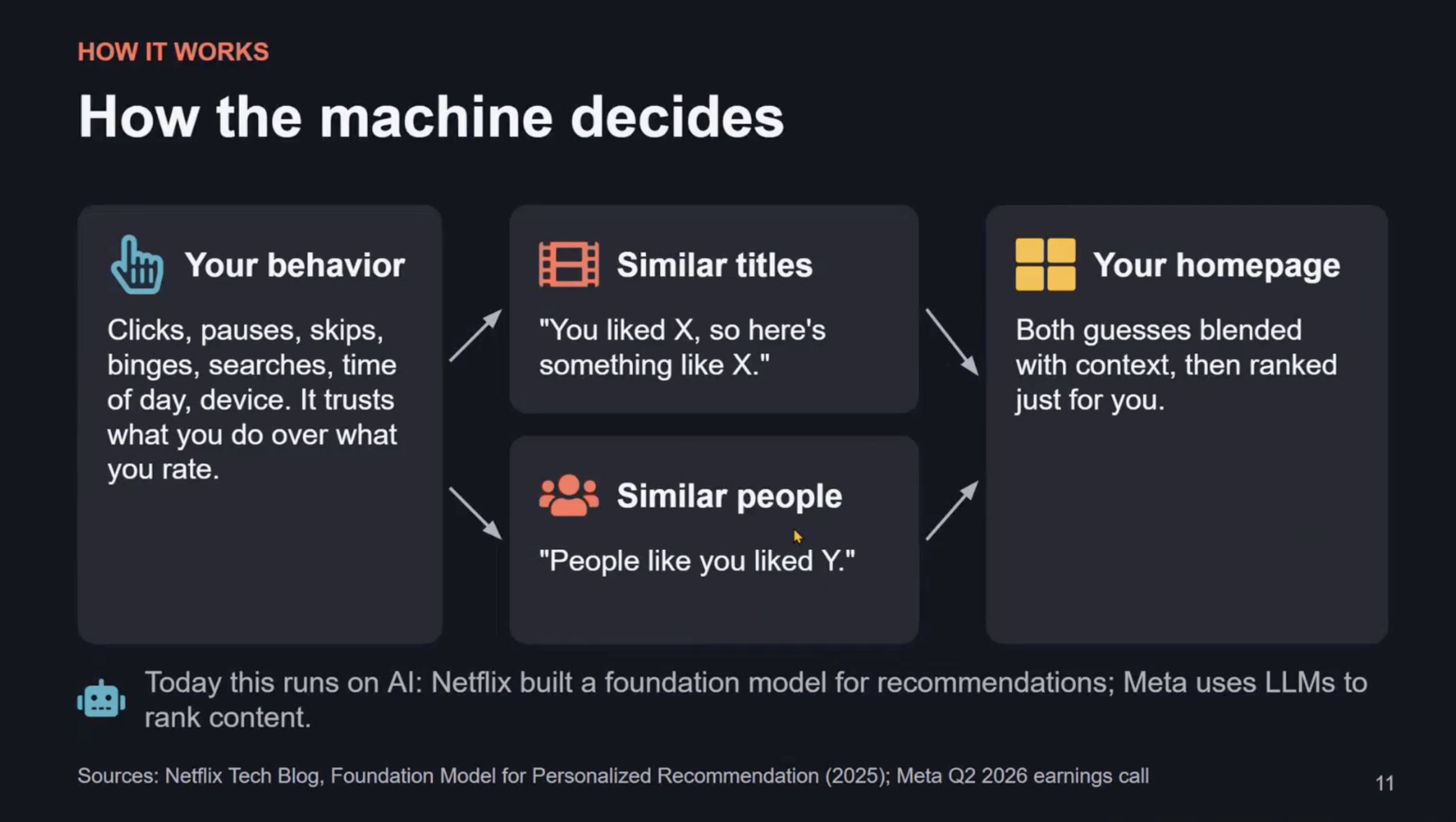
Using Netflix as an example, Marcos explained how streaming platforms analyze user behaviour, including clicks, searches, viewing history and even skipped content, to recommend titles tailored to individual preferences.
But personalization goes beyond improving the user experience. The speakers highlighted research showing that Netflix could experience a 16% decline in engagement with random recommendations, a 12% decline when recommending only popular titles and a 4% decline when using an older personalization system.
These findings demonstrate how recommendation technology can influence customer engagement, retention and business performance.
Behind the Algorithm: Understanding the Bigger Picture
While algorithms can identify patterns and predict preferences, the speakers emphasized that data doesn’t always tell the full story.
Through illustrative scenarios, Leila and Marcos explored how incomplete information, misleading metrics and biases can influence business decisions.
For example, a movie receiving fewer views might appear unpopular when the real issue is limited visibility, inaccurate descriptions or ineffective promotional images.
Participants also explored concepts such as survivorship bias, correlation versus causation and the importance of questioning assumptions before drawing conclusions.
The discussion reinforced a key lesson: meaningful insights require more than collecting information. They require context, critical thinking and an understanding of the people behind the numbers.
The Careers Behind Data-Driven Decisions
Beyond understanding how data works, participants discovered the range of career opportunities involved in transforming information into business insights.
Drawing from their own professional journeys, Leila and Marcos demonstrated that careers in data and AI don’t always follow a traditional path.
Leila transitioned from digital marketing and content strategy into analytics and AI, while Marcos moved from sales and business into data science.
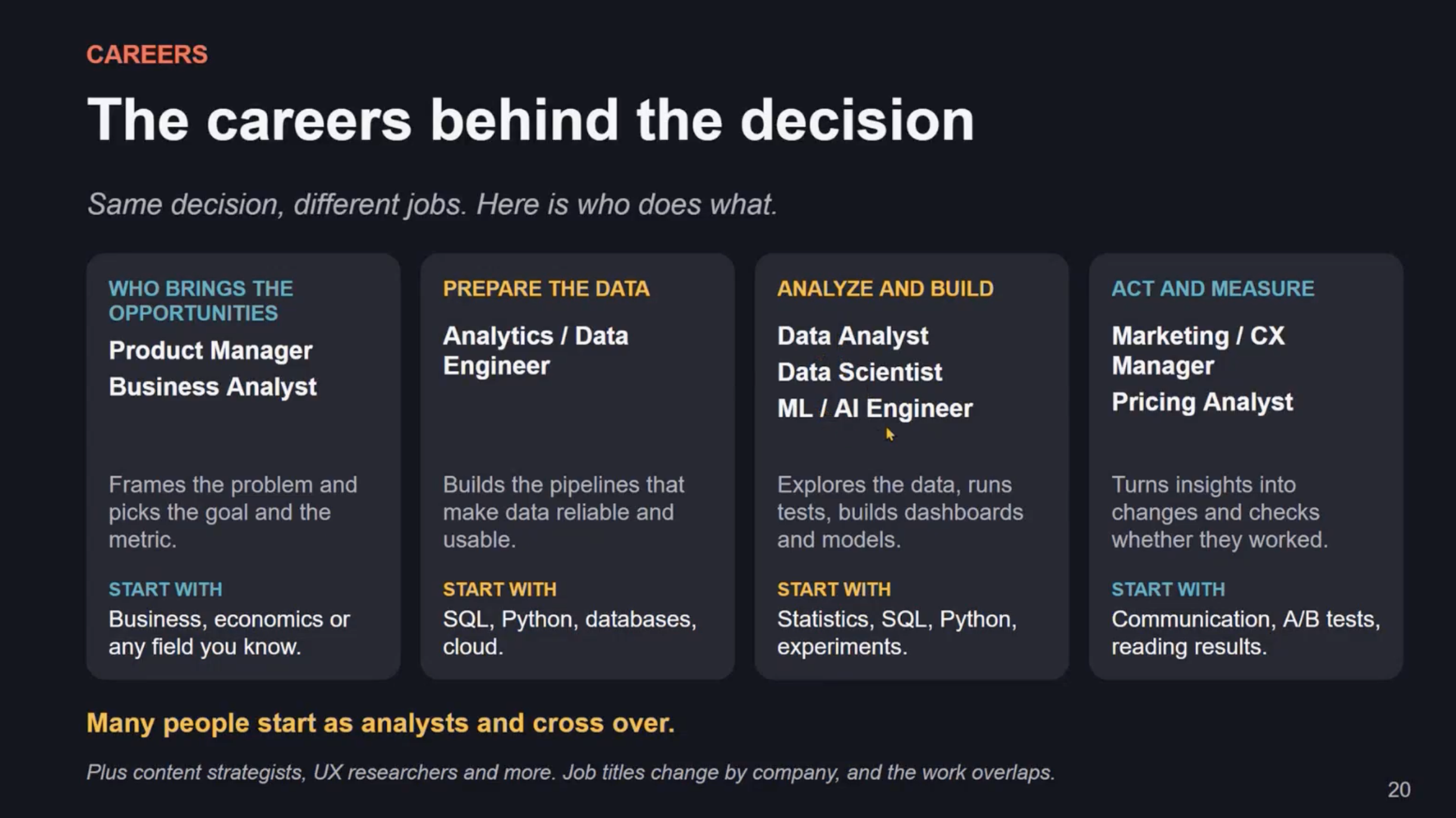
The speakers introduced several roles supporting data-driven decision-making, including business analysts, product managers, data engineers, data scientists, machine learning engineers and marketing professionals.
Each contributes differently, from identifying business challenges and preparing data to developing models, testing solutions and measuring results.
They also highlighted foundational skills such as SQL, Python, statistics, communication and business knowledge, encouraging participants to recognize how their existing experience can translate into opportunities in technology.
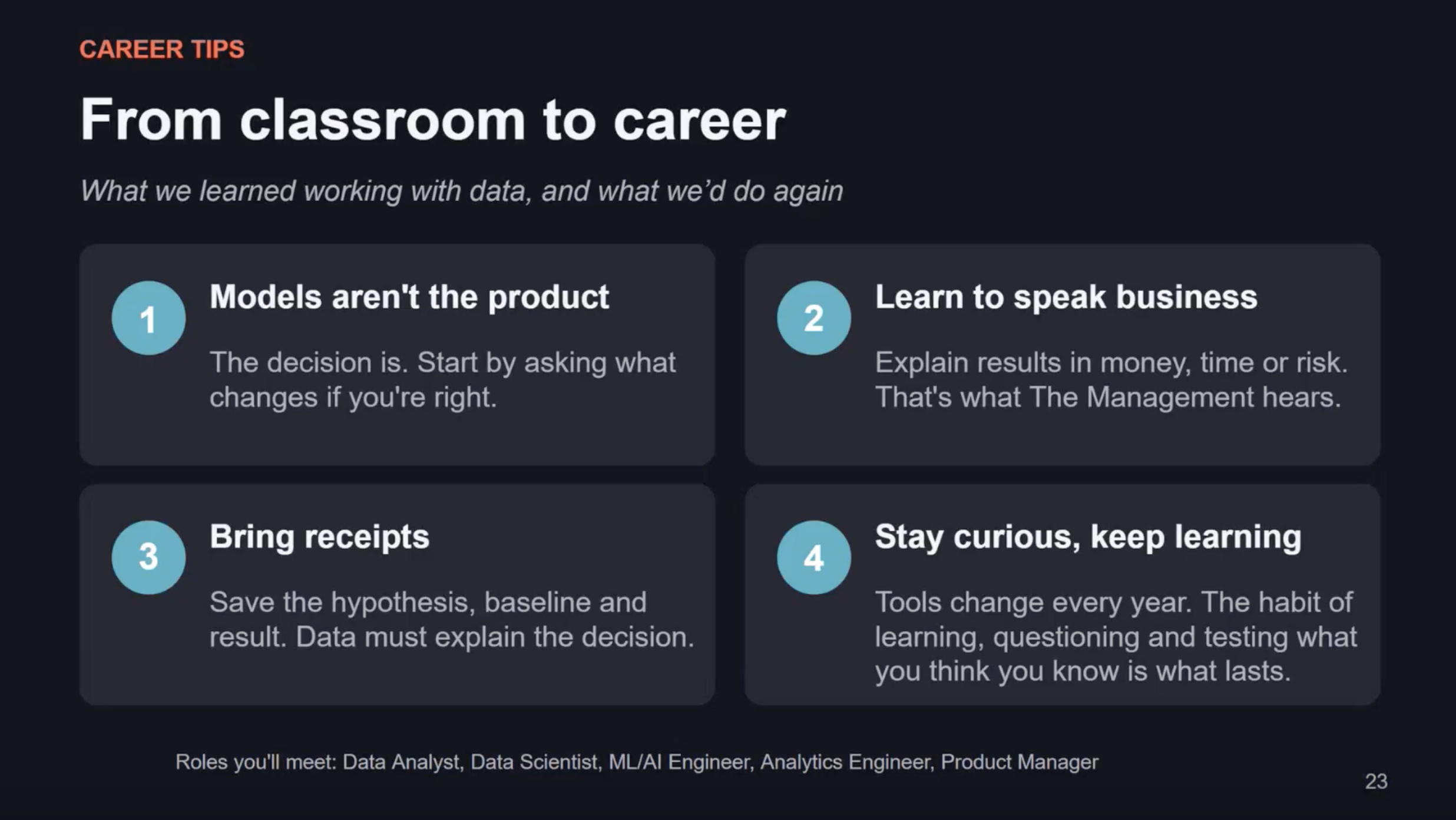
From Classroom to Career: Four Key Takeaways
To conclude the workshop, Leila and Marcos shared four practical lessons for students and emerging professionals interested in data, AI and technology:
- Focus on decisions, not just models. Understand the problem you’re solving and how your work can make a meaningful impact.
- Learn to speak business. Translate technical findings into outcomes that matter, including time, costs, risks and growth.
- Support your recommendations with evidence. Document assumptions, establish baselines and measure results to understand what works.
- Stay curious and keep learning. As technology evolves, asking thoughtful questions, challenging assumptions and adapting to new tools remain essential skills.
Throughout the workshop, participants engaged through polls, questions and discussions, connecting technical concepts with everyday experiences and potential career paths.
The session highlighted that success in data and AI isn’t just about technical expertise. It’s also about creativity, communication and the ability to turn information into meaningful action.
Continue Learning with TECHNATION Career Ready Program
Interested in exploring more opportunities in technology?
Through interactive workshops and industry-led events, TECHNATION’s Career Ready Program connects students with professionals, practical insights and learning experiences to help prepare them for Canada’s evolving digital workforce. Learn more.